There is no single licence. You need food business registration with the council, plus street trading consent or a licence if you trade on the street, a gas safety certificate for LPG, and an alcohol licence if you sell alcohol.
Food truck licences and rules in the UK: step by step

The rules are what put most people off starting a food truck. There is no single "food truck licence" in the UK, but a handful of registrations, licences and certificates from different bodies. Once you see them all in one place, it is manageable, and most of it only needs doing once.
The order matters. Find out what your council allows before you buy or build a van, and register your food business before you sell your first portion.
Always check the current rules with the official authorities
Rules and fees change, and a lot depends on your council and on whether you trade in England, Wales, Scotland or Northern Ireland. This page gives you the overview, but it does not replace the official sources:
- GOV.UK – register a food business
- Food Standards Agency – businesses that supply or produce food on the move
- Food Standards Scotland – registering a food business
- HMRC – register for VAT
- HSE – gas safety in catering and hospitality
- GOV.UK – employers' liability insurance
- Your council – street trading, licensing and environmental health
Last checked: 5 November 2026
Is there a food truck licence in the UK?
Not as one document. What people call a "food truck licence" is usually a mix of:
Food business registration with the council (free, required for everyone).
Street trading licence or consent from the council, if you trade on the street.
Gas safety certificate for LPG equipment.
Alcohol licence or Temporary Event Notice, only if you sell alcohol.
Music licence, only if you play music to customers.
1. How do you set up the business?
Most food truck owners start as a sole trader. You register by signing up for Self Assessment with HMRC, which you must do if you earn more than £1,000 from self-employment in a tax year. The deadline is 5 October after the end of the tax year in which you started (GOV.UK – register as a sole trader).
The alternative is a private limited company. Registering one online with Companies House costs £100 (GOV.UK – register your company). It means more admin, but the company is a separate legal entity.
Since April 2026, sole traders with qualifying income over £50,000 must also keep digital records and send quarterly updates under Making Tax Digital for Income Tax, and the threshold is set to fall in 2027 and 2028. Talk to an accountant before you choose your structure.
2. How do you register a food truck with the council?
Every food business must register with its local authority, and that includes businesses trading from a van or stall (FSA – food on the move).
When: at least 28 days before you start trading.
Cost: free, and registration cannot be refused.
Which council: the one where the van or trailer is normally stored overnight, not where you trade.
How: in England, Wales and Northern Ireland, through the online food business registration service. In Scotland, with your council's environmental health service (Food Standards Scotland).
After you register, an environmental health officer (EHO) will inspect you. Councils where you trade can inspect you too, and their findings go back to your home council.
3. Do you need a food hygiene certificate?
Not by law. Food handlers do not need a certificate to prepare or sell food. What the law does require is that everyone handling food is supervised and instructed or trained in food hygiene to match their work (FSA – food hygiene for your business).
In practice, most mobile caterers take a course, because it is the easiest way to prove the training. The usual recommendation is Level 2 Food Safety and Hygiene for food handlers and Level 3 for owners and managers. Keep certificates and training records in the van: EHOs and event organisers ask for them.
4. What is HACCP and Safer Food, Better Business?
Every food business must have food safety procedures based on HACCP principles: working out where things can go wrong (chilling, cooking, hot holding, allergens) and how you control each point.
You do not have to write this from scratch. The FSA's free Safer Food, Better Business for caterers pack is made for small catering businesses. You fill in the "safe methods" for your menu and keep the diary: opening and closing checks, cleaning, suppliers and staff training.
Scotland: use CookSafe. Northern Ireland: Safe Catering.
Allergens: for food that is not prepacked, you must be able to tell customers about the 14 allergens, in writing or verbally (FSA – allergen guidance).
5. How does the food hygiene rating work for a food van?
After the inspection, you get a rating.
England, Wales and Northern Ireland: Food Hygiene Rating Scheme. You are rated from 0 (urgent improvement necessary) to 5 (very good) (FSA – Food Hygiene Rating Scheme). Displaying the sticker is a legal requirement in Wales and Northern Ireland and voluntary in England (FSA – displaying your rating). Ratings are published online, and event organisers check them.
Scotland: Food Hygiene Information Scheme. No numbers: you get Pass or Improvement Required (Food Standards Scotland – FHIS).
Under both schemes you can ask for a re-visit after making improvements, appeal, or use a right to reply.
6. Where are you allowed to trade?
Registering lets you prepare and sell food. It does not let you park anywhere you like.
On the street in England and Wales. Councils can designate streets as licence, consent or prohibited streets (Local Government (Miscellaneous Provisions) Act 1982, Schedule 4).
Licence street: you need a street trading licence. Trading without one is a criminal offence.
Consent street: you need the council's written consent, often with conditions.
Prohibited street: no trading at all.
Fees and documents are set by each council. Expect an application fee, often non-refundable, and a request for proof of public liability insurance. London boroughs run their own schemes.
What you may sell: your street trading licence or consent lists what you may sell. Check that it covers your whole menu, including drinks, and ask the council before you add something new.
In Scotland. Street traders, burger vans included, need a street trader's licence under the Civic Government (Scotland) Act 1982. Many councils also require a Certificate of Compliance for the food unit, and some require a late hours catering licence if you trade between 11pm and 5am.
On private land. You need the landowner's permission, and regular trading can need planning permission, so ask the council.
At events, markets and festivals. The organiser usually holds the permissions for the site. Ask what they need from you: typically registration, hygiene rating, insurance, gas certificate and risk assessments.
How do you apply for a burger van pitch? Search your council's website for "street trading", check which streets are designated and read the street trading policy. Do it before you buy a van: size limits, hours and locations can decide which van makes sense.
7. What gas, electrical and fire safety rules apply?
Gas (LPG).
Work on gas in a mobile catering unit must be done by a Gas Safe registered engineer qualified for commercial mobile catering on LPG (Gas Safe Register). Check the engineer's ID card.
LPG catering equipment must be inspected and tested every year, with a gas safety certificate issued if it passes. Events and many councils will not let you trade without one.
Use appliances with flame failure devices, and keep cylinders out of the van unless there is a purpose-built, ventilated compartment (HSE – gas safety in catering).
Keep cylinders upright, in the open air and secured against tampering, at least 1 metre from sources of ignition, and make sure someone trained in LPG is on every shift.
Most UK food vans cook on LPG and only use electricity for fridges, lights, extraction and the card reader. Nuento's guide to power and gas covers plugs, generators and gas in more detail.
Electrics and PAT. The law requires electrical equipment to be kept safe, but annual PAT testing is not itself a legal requirement (HSE – PAT). Check cables and plugs before each event, have equipment inspected and tested by a competent person at sensible intervals, and keep the paperwork: many events ask for a recent PAT certificate.
Fire and risk assessments. You must assess the fire risks of your workplace, and with five or more employees the significant findings must be written down (GOV.UK – fire risk assessments). The same threshold applies to your health and safety risk assessment (HSE). Write both down anyway, because event organisers ask for them. Carry a fire blanket and a suitable extinguisher, especially if you fry. Many events require both at every cooking position and say which type and size.
8. What insurance does a food truck need?
Employers' liability: compulsory once you employ someone, with at least £5 million cover. You can be fined £2,500 for every day you are not properly insured. There are exemptions, for example if you only employ close family (GOV.UK – employers' liability insurance).
Public and product liability: not required by law, but you will hardly trade without them. Councils often require public liability for street trading, and many markets and events ask food traders for at least £5 million.
Vehicle and equipment: a food van needs motor insurance covering business use and the conversion. A catering trailer needs its own cover.
Get quotes from a specialist in food truck or catering trailer insurance, and tell them exactly how you cook (LPG, fryers, generator).
9. Can you drive your food truck into the city? Clean air zones
More and more UK cities charge or fine older vehicles that enter a clean air zone. If you have a booking or a pitch in a city, check before you go whether your van, or the car towing your trailer, is affected.
London: ULEZ. The Ultra Low Emission Zone covers all London boroughs and applies to cars and vans. If your vehicle does not meet the standards, you pay a daily charge for every day you drive in the zone. Central London also has a separate Congestion Charge. Check your number plate with TfL.
Clean Air Zones in England. Cities such as Birmingham, Bristol, Bradford and Newcastle and Gateshead have Clean Air Zones with a daily charge for vehicles that do not meet the standards. Which vehicles pay depends on the zone: in some, vans pay but private cars do not; in others, cars pay too. Check your vehicle and pay at GOV.UK – Clean Air Zones.
Scotland: Low Emission Zones. Glasgow, Edinburgh, Aberdeen and Dundee have Low Emission Zones. There is no daily charge: a vehicle that does not meet the standards may not enter at all, and the registered keeper gets a penalty charge that rises for repeat entries. Check your vehicle at Low Emission Zones Scotland.
The standards. For cars and vans the usual minimum is Euro 4 for petrol and Euro 6 for diesel, roughly petrol vehicles from 2006 and diesel vehicles from late 2015. Check your own vehicle rather than going by its age.
Trailers. A catering trailer has no engine. What counts is the vehicle towing it.
Electric. A fully electric vehicle meets the standards in every zone.
10. When does a food truck need to register for VAT?
You must register if your taxable turnover over the previous 12 months goes over £90,000, or if you expect to go over £90,000 in the next 30 days alone. You can register voluntarily below the threshold (GOV.UK – register for VAT).
The 12 months are rolling, not the tax year. A busy festival summer can push you over.
Hot takeaway food and hot drinks are generally standard-rated, while most cold takeaway food is zero-rated (HMRC – VAT Notice 709/1). Most of what a food truck sells is hot.
Set your prices with VAT in mind from the start, and get an accountant to help in the first year.
11. Can you sell alcohol from a food truck?
Only with a licence. In England and Wales:
Temporary Event Notice (TEN): for one event with fewer than 500 people at any time, lasting up to 168 hours. Give it to the council at least 10 working days ahead; the fee is £21. You can give 5 a year, or 50 with a personal licence (GOV.UK – TEN).
Personal licence: requires a licensing qualification (GOV.UK – personal licence). A premises licence covers regular sales at one site.
At a private party: if you serve drinks at a wedding, birthday or company party, you need the same authorisation, even when guests pay nothing at the bar because the host has paid for the drinks in advance. You are still selling the alcohol, to the host. Either the venue's premises licence covers your bar, which you agree with the licence holder, or you give a TEN for the event. Sort it out before you accept a booking with drinks.
Late night refreshment: selling hot food or drink between 11pm and 5am is also licensable. A TEN can cover it.
In Scotland, caterers at events, weddings and other private functions included, normally need an occasional licence from the licensing board, and only a premises licence holder or a personal licence holder can apply for one (Scottish Government). At festivals, ask the organiser first: many run the bars themselves.
12. Do you need a music licence?
If you play music to customers, yes: normally TheMusicLicence from PPL PRS (PPL PRS). A personal streaming account is for personal use only. At festivals, the organiser usually handles music, so check before you play your own.
Checklist: before you sell your first portion
Registered as a sole trader with HMRC, or limited company set up
Food business registered with the council where the van is kept overnight, 28 days before trading
Food hygiene training for you and your staff, with records
Safer Food, Better Business (or CookSafe / Safe Catering) filled in, allergens covered
Street trading licence or consent, landowner permission, or agreement with the organiser
Gas checked by a Gas Safe engineer qualified for LPG and mobile catering, with a certificate
Electrical equipment checked and PAT tested
Fire and health and safety risk assessments written down; fire blanket and extinguisher in the van
Public and product liability insurance, employers' liability if you have staff, vehicle or trailer cover
Van or towing car checked against ULEZ, Clean Air Zones and Scottish LEZs if you trade in those cities
Turnover watched against the £90,000 VAT threshold
TEN, personal licence or occasional licence if you sell alcohol
TheMusicLicence if you play music
More from the guide
Frequently asked questions
Ready to trade?
Once the paperwork is sorted, the next step is filling your calendar. Nuento is mobile catering with staff on site: food trucks, mobile bars and chefs who cook and serve at the customer's event, never delivery of ready-made food. Private and corporate customers book food trucks through Nuento for weddings, parties and company events.
It is free to join. There is no subscription: you only pay a service fee on the bookings you accept, and Nuento handles the payment from the customer. Nuento has a rating of 4.9 out of 5 on Trustpilot.
 By Mathilde Neuvecelle· 5 Nov 2026
Related posts
Suppliers
Mathilde Neuvecelle · 5 Nov 2026
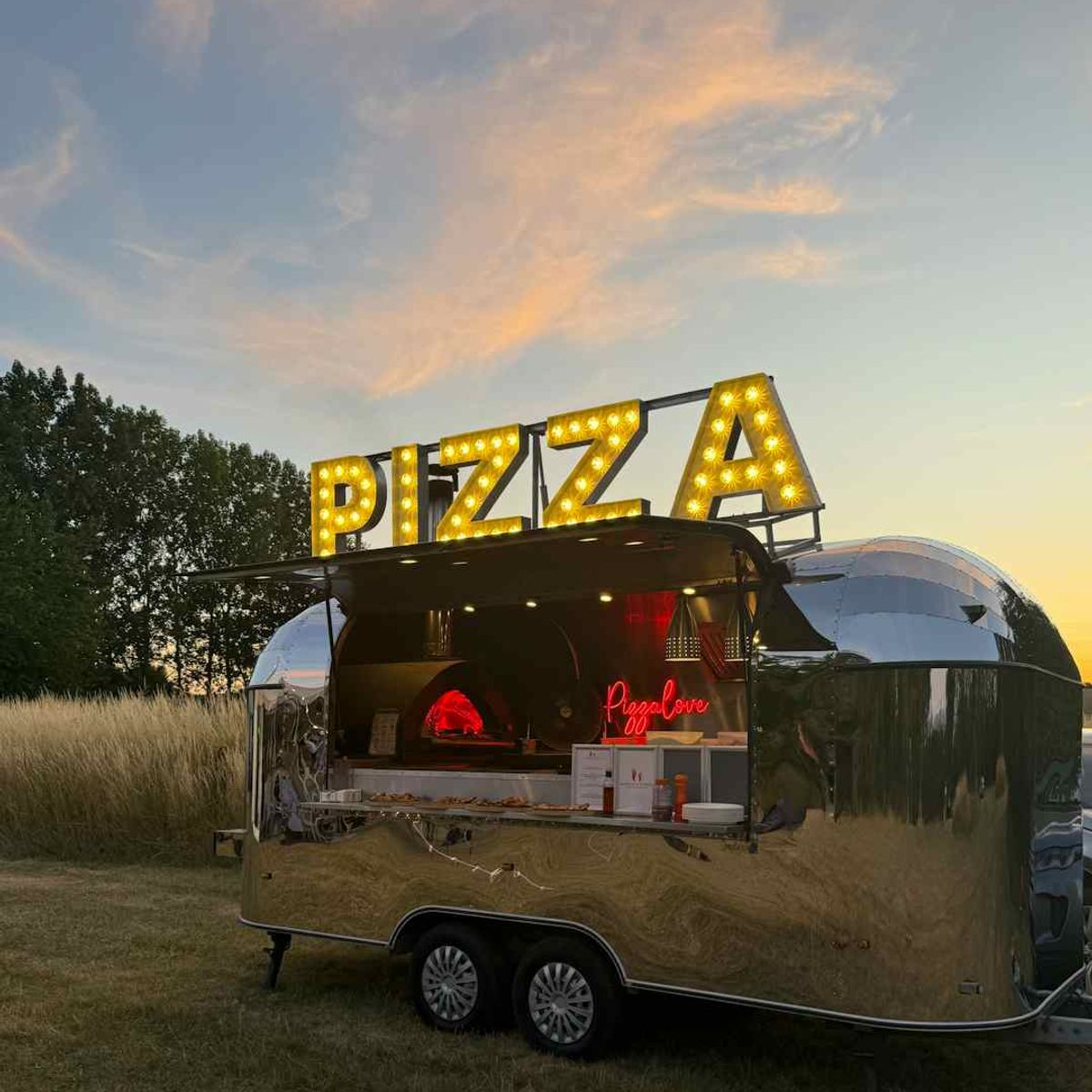
Power and gas for your food van: what you actually need
Suppliers
Mathilde Neuvecelle · 5 Nov 2026
Where do food truck bookings come from – and how to get more

Suppliers
Mathilde Neuvecelle · 5 Nov 2026